For millions of residents, hope is a three-digit number: 2-1-1.
For 211 LA, this February marks 45 years of giving hope to residents of Los Angeles County during their time of need, with over 29 million calls handled since 1981.
Each year, on February 11th, our dedicated team and community leaders come together to reflect on the impact of 2-1-1 services in our communities and explore ways to improve care for residents in need.
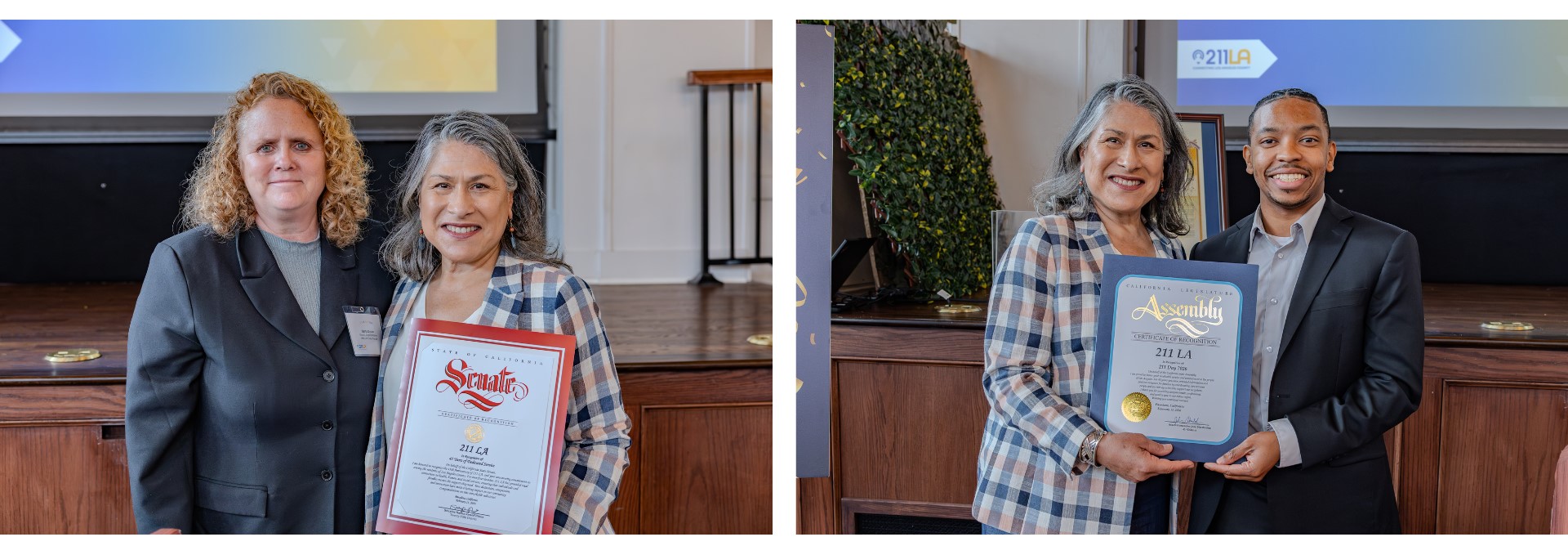
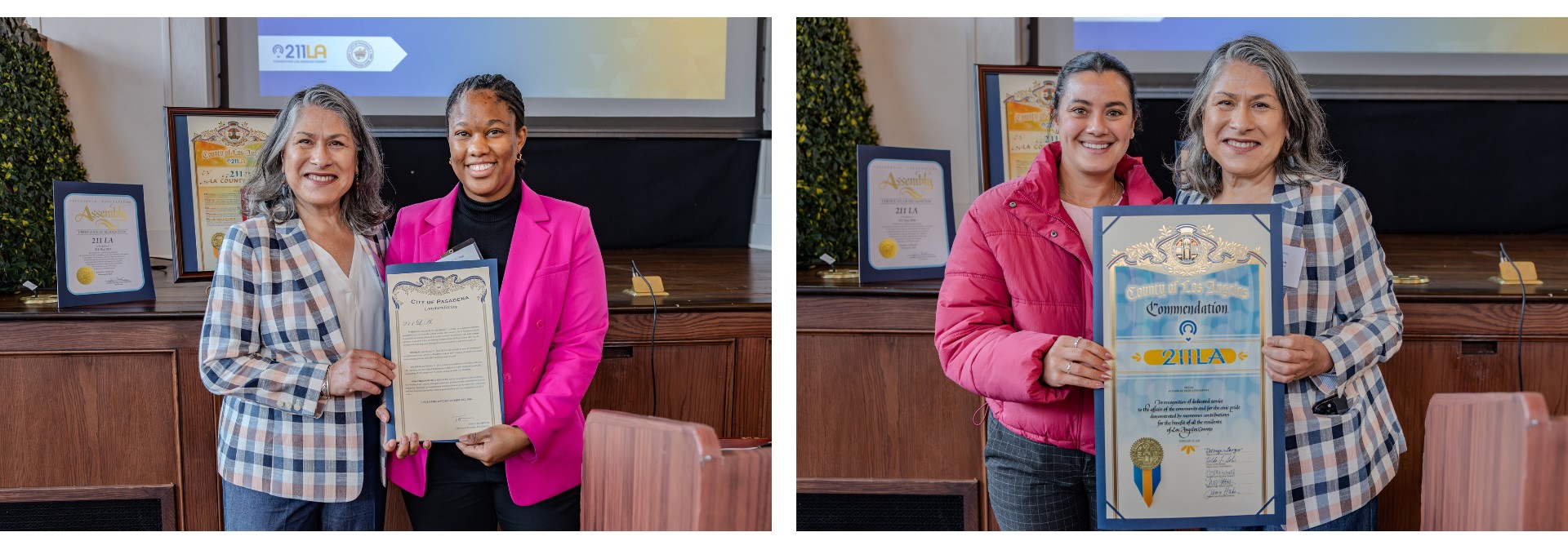
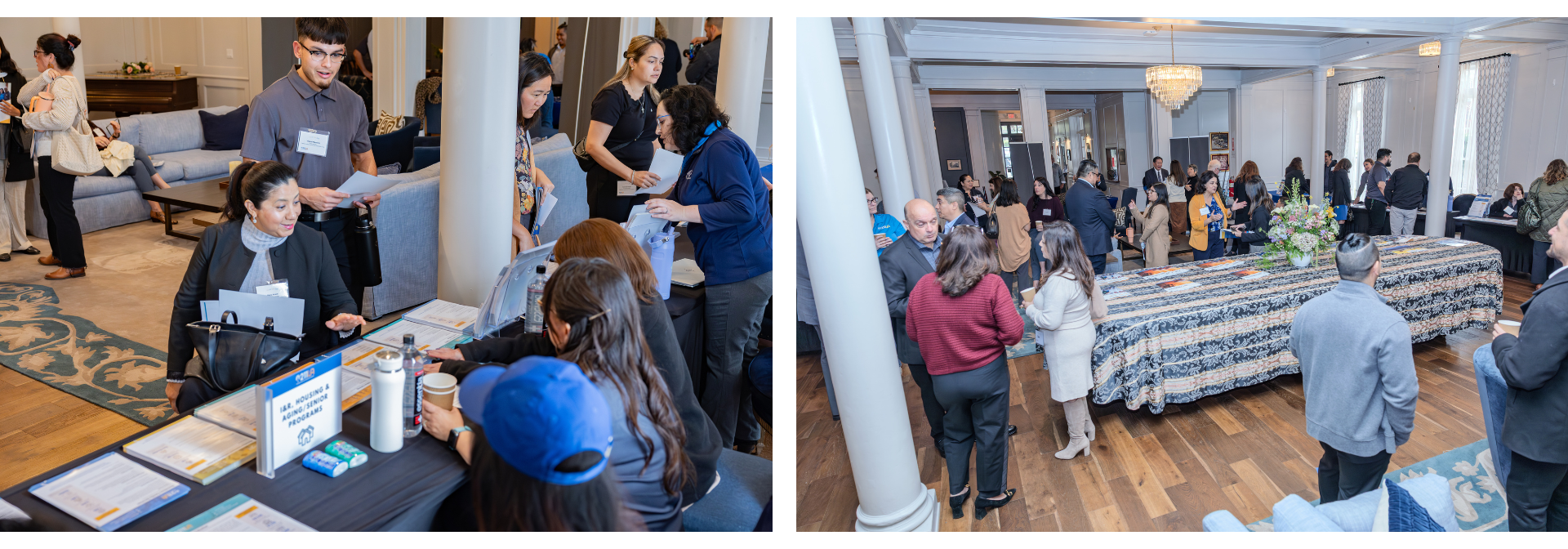
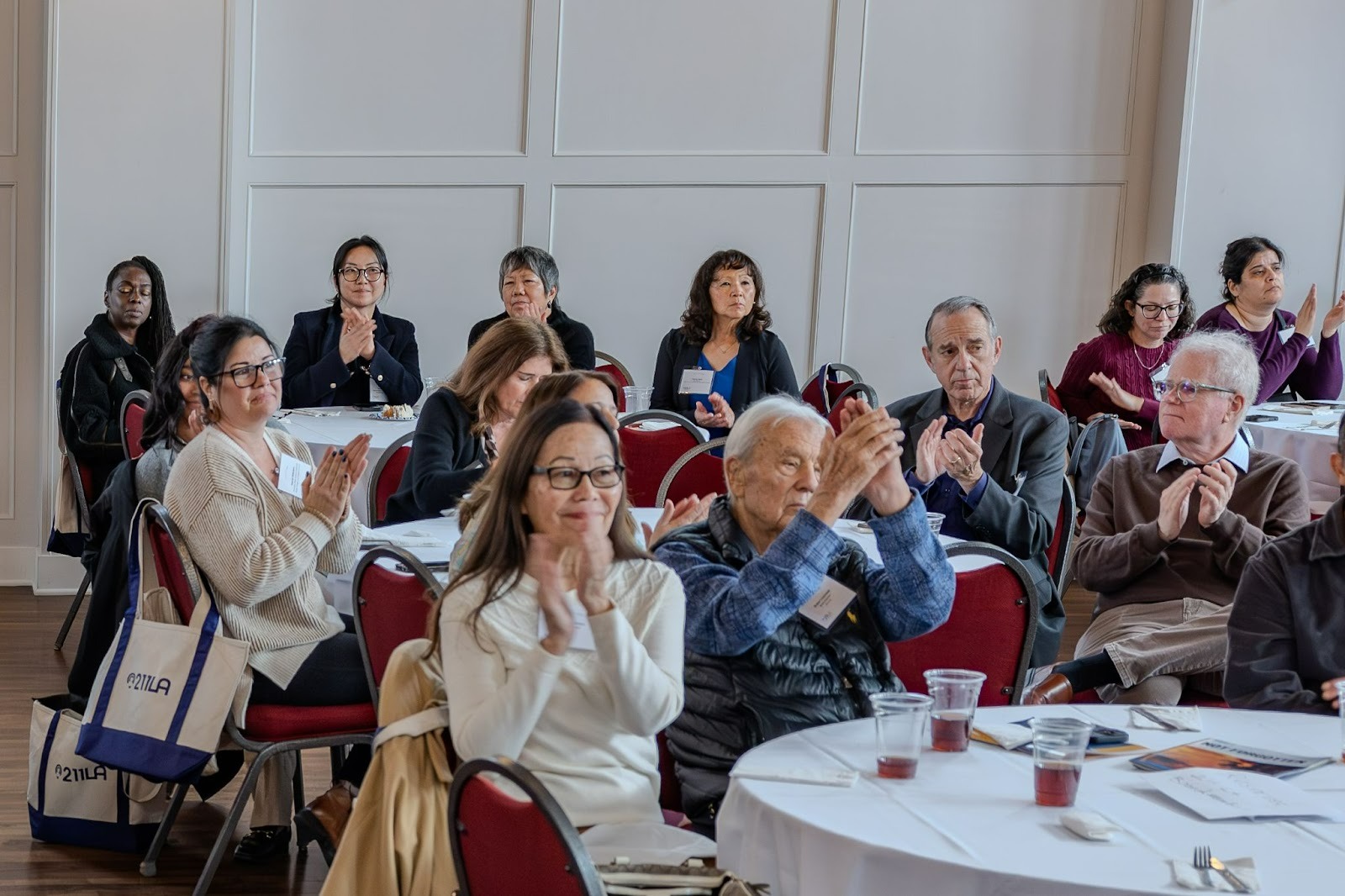
To ring in the milestone, 211 LA hosted 211 Day 2026 at the Elks Lodge in Pasadena, California, where 211 LA was honored for its community service by state and local leaders:
- Two recognitions from the Los Angeles County Board of Supervisors:
- A formal Commendation
- A proclamation declaring February 11 as “211 LA Day”
- A Commendation from the City of Pasadena, presented by Councilmember Tyron Hampton (First District)
- A Certificate of Recognition from the Office of John Harabedian, 41st Assembly District
- A Certificate of Recognition from the California State Senate, presented by Senator Sasha Renée Pérez
As LA County’s 24/7 information and referral hub, we connect hundreds of thousands of residents each year to essential services through coordinated partnerships with County agencies and fellow nonprofits.
211 Day 2026 became a moment not only to celebrate the longevity of a community safety net, but to honor the 1.3 million Angelenos impacted by 211 LA services last year: Children, families, older adults, veterans, and individuals, each facing their own challenges and trusting 211 LA to guide them through.
This means helping residents in real-time navigate:
- Housing and Homelessness: Housing instability shapes much of life across Los Angeles County. Rising rents, limited shelter capacity, and long waitlists mean many residents contact 211 LA when options are already narrow.
- Health and Care Coordination: Many residents contacting 211 LA are managing health challenges alongside housing instability, behavioral health needs, and financial stress. These situations require continuity rather than one-time referrals, especially for people navigating multiple systems at once.
- Children, Families, and Caregivers: Families and caregivers often reach out to 211 LA when responsibilities collide and support feels out of reach. 211 LA helps families stabilize early, identify developmental needs, connect to culturally responsive supports, and reduce isolation for caregivers.
- Aging and Disabilities Services: Older adults and people with disabilities often rely on consistent access points when navigating long-term services. 211 LA helps residents understand options, complete next steps, and remain connected to supports that promote safety and independence.
- Safety & Protecting Reporting: When someone is experiencing abuse, exploitation, or immediate safety concerns, the ability to reach a trained responder at any hour is critical. 211 LA operates specialized lines that support reporting, rapid triage, and connection to protective and follow-up services.
- Reporting Hate: When hate harms a person or a community, reporting is only the first step. 211 LA supports local and statewide systems that make reporting accessible, provide culturally responsive care coordination, and connect survivors to healing and legal supports.
- Specialized Lines and Programs: In addition to the 2-1-1 operational line, 211 LA operates specialized hotlines and program lines that serve specific communities and system partners. These lines ensure people can access the right support quickly, and that partner agencies can rely on consistent, trained staffing and data-backed reporting.
But this year’s gathering carried special meaning, going beyond a celebration of longevity.
 Following a year marked by multiple crises across LA County, the need for trusted and accessible support had never been greater in our community in 2025.
Last year was colored by unprecedented loss for residents impacted by the Eaton and Palisades Fires. Within 48 hours of the flames erupting, 211 LA launched recovery care
coordination to help survivors stabilize and rebuild, prioritizing older adults, families with children, and residents with access and functional needs.
The 211 LA team and community leaders also gathered to spotlight the inspiring stories of wildfire-impacted families, honoring both their continued resilience and showcasing the intensive work behind our disaster recovery efforts from 2025.
Key highlights from these efforts included:
- 54,000+ impacted households supported with referrals, navigation, and crisis support
- $1.7 million in direct financial assistance for essential goods distributed to wildfire-impacted residents
- 63,000+ nights of non-congregate lodging delivered
Behind every data point is a person still
recovering from unimaginable loss.
— Maribel Marin, Executive Director, 211 LA
At the heart of 211 Day 2026 are the survivors of the 2025 Los Angeles Wildfires. Our short film, “Hope Has A Number,” made in partnership with Art Simon Productions, brings those experiences to the forefront. From renewed hope for older adults to restored stability for children, these stories define the critical role 211 LA plays in crisis recovery. Watch “Hope Has A Number” here.
Building on the impact of our crisis response, 211 LA celebrated the continued growth of the 211 LA Crisis Care Plan Alliance (211 LA CCPA), welcoming three new partners to the crisis response network:
- National Alliance on Mental Illness, Greater Los Angeles County (NAMI GLAC)
- National Council of Jewish Women, Los Angeles (NCJWLA)
- Communities Actively Living Independent and Free (CALIF)
Click here to learn more about the 211 LA CCPA.

For 45 years, 211 LA has been a trusted guide for residents who are overwhelmed and unsure what to do next. We remain committed to this role, continuing to innovate as needs grow and helping our community move forward, together.
Thank you to community leaders and team members for yet another memorable 211 Day.