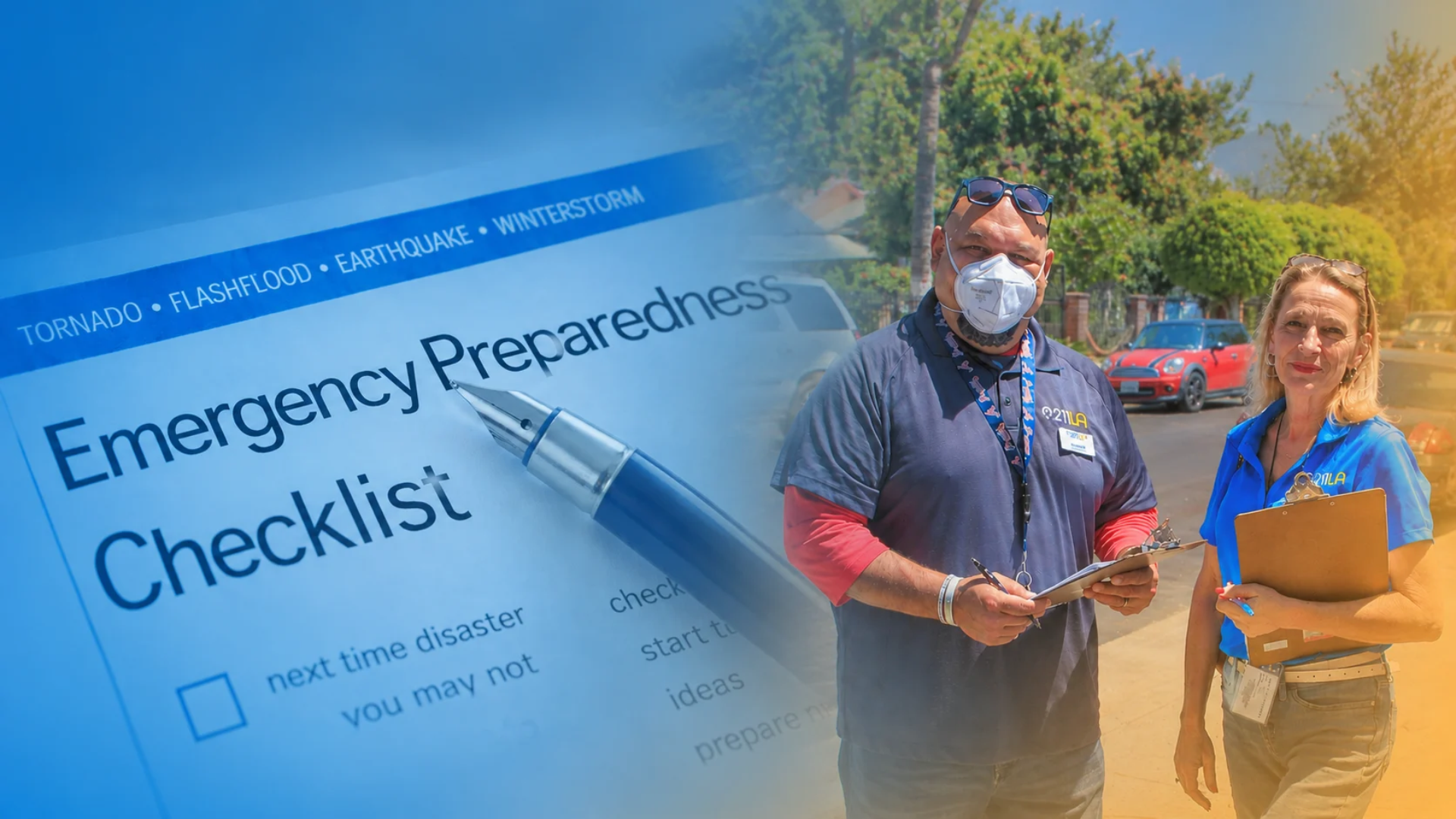
We know that disasters can happen at any moment. As Los Angeles County's 24/7 information and referral service provider, we prepare year-round to help connect residents with information, resources, and support before, during, and after emergencies.
But preparedness is a shared responsibility. Taking extra precautions now can help you and your loved ones respond when disaster strikes.
September is Disaster Preparedness Month, so it's a good time to review your emergency plan, gather supplies, and learn about the risks in your community.
Prepare for the Season Ahead
Southern California is preparing for the potential impacts of El Niño, a weather pattern that can bring wetter-than-normal conditions and increase the risk of flooding, landslides, and debris flows.
While weather patterns can change, now is a good time to prepare your home and family for the months ahead. Clear drainage areas, gather emergency supplies, and learn where to access resources before severe weather arrives.
Know the Risks
Los Angeles County and Southern California face a range of natural and human-caused disasters, including wildfires, earthquakes, flooding, extreme heat, power outages, and hazardous material emergencies.
Learn more about the types of disasters that can affect Los Angeles County and Southern California and how to prepare for them:
- Ready LA County Emergency Preparedness Resources
- Los Angeles County Emergency Survival Guide
- Los Angeles County Department of Public Health Emergency Preparedness Resources
- National Weather Service El Niño Information
How 211 LA Helps During Disasters
Disaster response is part of 211 LA's work year-round. From the 1994 Northridge Earthquake and the Malibu/Woolsey and Bobcat fires to the South LA Fireworks Explosion, the 2025 Los Angeles wildfires and the 2026 Boyle Heights warehouse fire and ammonia leak, our teams have helped residents navigate emergencies and connect to support.
When disaster strikes, 211 LA works alongside first responders, emergency management teams, government agencies, nonprofits and community organizations to gather and verify information about available resources. Our teams rapidly update our resource database as services and disaster needs change, while monitoring emerging needs and rumors to help ensure residents have access to accurate, timely information.
Our 24/7 information and referral specialists then help residents connect to available resources, including temporary housing, food, health and safety services, emergency supplies and recovery support.
When disaster strikes, call 2-1-1. We're here 24/7 to help connect you with trusted information and resources.
Prepare for El Niño
As we head into winter, now is a good time to prepare for the possibility of wetter-than-normal conditions associated with El Niño. Heavy rain can increase the risk of flooding, mudflows, and debris flows, especially in areas recently affected by wildfires.
A few simple steps can help:
- Clear gutters and storm drains around your home.
- Keep sandbags on hand if you live in a flood-prone area.
- Secure outdoor items that heavy rain or wind could damage or carry away.
- Review your emergency plan and make sure you have household supplies.
- Sign up for emergency alerts so you can receive weather and evacuation information.
For residents in foothill communities, canyons and recently burned areas, it is especially important to understand your local risks. Heavy rain can loosen soil and carry mud, rocks, ash and debris downhill, creating dangerous conditions with little warning.
Learn more about El Niño and how to prepare through the National Weather Service and Los Angeles County emergency preparedness resources.